
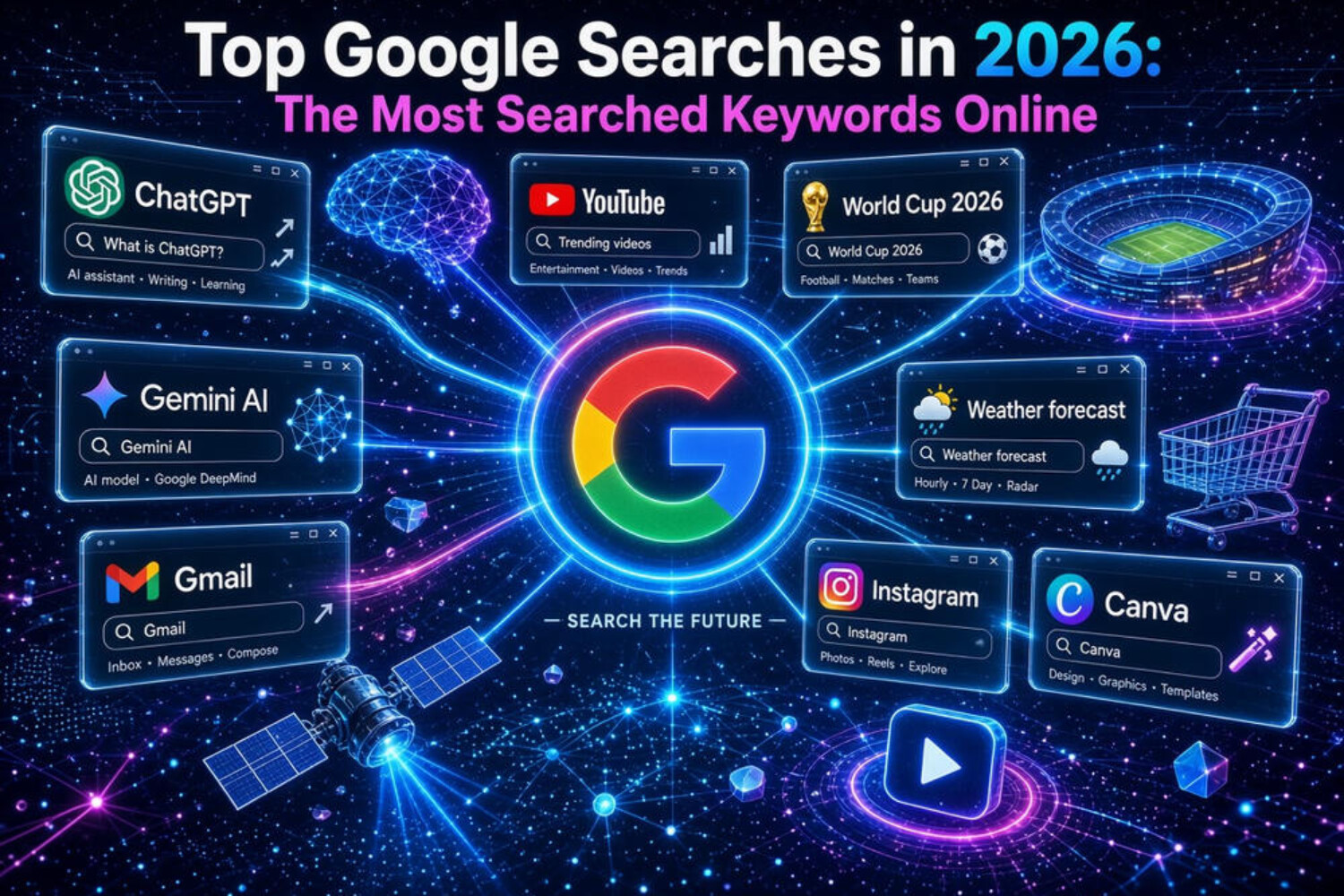
Most Searched Things on Google in 2026: Trends, Data, and What the World Is Looking For
Search behavior evolves alongside technology, culture, and global events. Every second, Google processes nearly 100,000 queries, capturing a live pulse of human curiosity, daily routines, and breaking news.
Looking at the search landscape in 2026, user queries reflect both perennial digital habits and radical technological shifts. While navigational searches for major platforms still account for millions of daily queries, the rise of multimodal inputs, AI-assisted summaries, and landmark international events has reshaped how people phrase their questions.
Below is an in-depth breakdown of the most searched keywords, emerging patterns, and what the top Google searched in 2026 reveal about modern internet culture.
1. The Evergreen Giants: Navigational and Utility Queries
Regardless of how sophisticated search algorithms become, a substantial portion of global search volume remains anchored in simple utility and navigation. Many internet users continue to treat the Google search bar as an address bar or quick-launch dashboard.
+-------------------------------------------------------------+
|               Top Navigational Search Pillars               |
+-------------------------------------------------------------+
|  1. Video & Social Platforms (YouTube, WhatsApp, Instagram) |
|  2. Productivity & Utilities (Gmail, Google Translate)      |
|  3. Real-Time Micro-Data     (Weather, Calculator, Wordle)  |
|  4. E-Commerce & Retail      (Amazon, eBay, Walmart)        |
+-------------------------------------------------------------+
The Power of Navigational Terms
Every month, billions of queries consist of single-word brand names. Users routinely search for terms like:
- YouTube
- Facebook / Instagram / WhatsApp Web
- Amazon
- Gmail
- Translate
Even with direct bookmarks and dedicated mobile applications, typing a brand name into Google remains the default path to reaching destination websites.
Daily Micro-Utilities
Utility-driven single terms also dominate global search volume. Queries such as “weather,” “calculator,” “speed test,” and daily puzzle games like “Wordle” generate consistent, high-volume traffic across nearly every region. These utility searches require zero navigation past the search engine results page (SERP), providing immediate answers via built-in widgets.
2. Global Events Driving the Top Google Searched in 2026
Every year is defined by its major events, and 2026 features several massive cultural and sporting milestones that claim the top spots in search volume charts.
   2026 Search Drivers
   ┌─────────────────────────────────────────────────────────┐
   │ [FIFA World Cup 2026] ──> Scores, Fixtures, Stadiums    │
   │ [Winter Olympics]     ──> Medal Tables, Live Streams    │
   │ [Elections & Policy]  ──> Real-Time Polling, Debates    │
   │ [Entertainment]       ──> Film Trailers, Global Tours   │
   └─────────────────────────────────────────────────────────┘
The 2026 FIFA World Cup
Hosted jointly across the United States, Canada, and Mexico, the 2026 World Cup represents one of the largest sustained traffic drivers in Google history. High-velocity queries include:
- “World Cup 2026 schedule”
- “World Cup standings today”
- “World Cup tickets North America”
- Specific team match-ups, player injuries, and live scores.
During tournament weeks, sports-related queries outpace almost every other search category globally.
Major Entertainment and Cultural Moments
Pop culture continues to generate explosive, short-term search spikes. The top keywords in entertainment center around:
- Blockbuster Film Releases: Highly anticipated franchise continuations and cinematic universe updates.
- Global Concert Tours: Ticketing portals, tour dates, and setlists for international pop icons.
- Award Ceremonies & Festivals: Real-time winner updates for the Oscars, Grammys, and major film festivals.
3. The Shift to Conversational and AI-Driven Queries
The integration of advanced generative AI into search engines has fundamentally transformed how people search. Instead of typing rigid keyword combinations like “best running shoes flat feet 2026”, users increasingly type natural-language sentences and complex prompts.
TRADITIONAL SEARCH (Keyword-Heavy)
"best budget smartphone 2026 review"
                   │
                   ▼
MODERN CONVERSATIONAL SEARCH (Natural Language)
"What is the best phone under $500 that has wireless charging and good battery life?"
Long-Tail Question Searches
Questions starting with “How to,” “What is,” and “Why does” have surged. Users treat search engines like personal research assistants, leading to higher search volume for queries such as:
- “How to automate daily tasks with AI agents”
- “What is the difference between solid-state batteries and lithium-ion?”
- “Why is inflation slowing down in 2026?”
Multimodal and Visual Inquiries
With the ubiquity of features like visual search and screen-based inquiry tools, text-based search queries are frequently paired with image captures. Searches that include contextual descriptions—such as “identify this plant” or “find similar jackets to this photo”—represent an expanding segment of monthly search data.
4. Top Search Categories: A Comprehensive Breakdown
To understand what captures global interest, it helps to look at the highest-ranking search themes across core industry verticals.
| Category | Typical High-Volume Searches | Primary User Intent |
|---|---|---|
| Technology & AI | “AI video tools,” “quantum computing news,” “new iPhone” | Commercial & Informational |
| Finance & Markets | “Bitcoin price,” “crypto market today,” “stock market futures” | Real-time Transactional |
| Health & Wellness | “Intermittent fasting schedule,” “sleep hygiene tips” | Informational |
| Travel & Lifestyle | “Cheap flights to Tokyo,” “best national parks to visit” | Commercial Investigation |
| Education & Career | “Remote tech jobs,” “free coding courses,” “resume templates” | Navigational & Informational |
5. Technology, AI, and Innovation Searches
The ongoing rapid development of artificial intelligence, consumer electronics, and spatial computing keeps tech queries consistently near the top of search rankings.
Generative Tools and Digital Assistants
Users regularly search for emerging software platforms, generative media creators, and productivity integrations. Queries like:
- “Top AI tools for productivity”
- “Best open-source LLMs”
- “Text to 3D model generator”
These terms reflect a mainstream audience actively incorporating next-generation digital tools into work and personal projects.
Hardware and Next-Gen Devices
Consumer curiosity remains high around flagship hardware updates. Annual release cycles for smartphones, wearable health monitors, VR/AR headsets, and electric vehicle advancements produce predictable, massive search spikes every autumn and spring.
6. Financial and Economic Search Behavior
Economic navigation remains a daily priority for millions of searchers worldwide. High-intent queries fluctuate with market volatility and macroeconomic announcements.
Financial Search Landscape
├── Cryptocurrencies & Digital Assets (Live prices, wallet guides)
├── Stock Indices & Commodities       (S&P 500, Gold spot price, Oil)
└── Personal Finance & Real Estate    (Mortgage rates, inflation calculators)
High-Frequency Financial Keywords
- Market Trackers: Queries like “Dow Jones live,” “Bitcoin ETF inflows,” and “gold price per ounce” generate heavy continuous traffic.
- Personal Finance Tools: High interest rates and cost-of-living adjustments have made terms like “high-yield savings account rates” and “mortgage payment calculator” staple search fixtures.
7. What High Search Volumes Mean for Creators and Marketers
Understanding the most searched keywords is more than an exercise in curiosity—it provides critical insights for digital strategists, content creators, and businesses aiming to reach active audiences.
SEO Strategy in 2026
┌─────────────────────────────────────────────────────────┐
│ 1. Focus on Informational Depth over Exact-Match Terms │
│ 2. Optimize for AI Overviews and Direct-Answer SERPs   │
│ 3. Build Authority Around Core Industry Entities       │
│ 4. Target Specific User Intent (Informational vs. Buy) │
└─────────────────────────────────────────────────────────┘
1. Intent Matters More Than Raw Volume
Targeting a single massive term like “weather” or “YouTube” is ineffective for content publishers. High-performing content strategies focus on high-intent, mid-tail, and long-tail variations where users seek detailed analysis, comparisons, and actionable solutions.
2. Optimizing for Direct Answers
Because modern search engines summarize answers directly on the results page, websites must structure their content with clear headings, bulleted lists, and concise summaries to be cited as authoritative sources within AI overviews.
3. Entity-Based Optimization
Search engines now understand relationships between topics, people, and brands rather than relying purely on text strings. Creating comprehensive topical coverage around your niche helps search algorithms categorize your content accurately alongside the top keywords in your industry.
Conclusion
The list of the top Google searched in 2026 highlights a fascinating balance between routine and innovation. On one hand, people consistently rely on Google for basic navigation, everyday calculations, and quick access to major digital platforms. On the other hand, major global spectacles like the 2026 World Cup, technological breakthroughs, and evolving economic conditions spark massive waves of exploratory queries.
As search tools continue to blend text, voice, and visual inputs, tracking the world’s most searched keywords offers a window into our collective priorities, interests, and daily digital lives.
